Spec Battle: Magstor Thunderbolt 3 Lto Drive vs Acer Aspire 14 Ai 2025 — Is It Worth Upgrading?
The decision to upgrade hardware often boils down to one question: what problem is the upgrade meant to solve? On one side of this spec battle is a specialized storage appliance — the Magstor Thunderbolt 3 LTO drive — aimed at long-term backup and archival workflows. On the other is a modern 14-inch laptop, the Acer Aspire 14 Ai 2025, designed for everyday productivity with some on-device AI enhancements. This article compares their strengths, real-world roles, and whether either (or both) are a sensible upgrade for typical buyers such as photographers, videographers, small businesses, and power users.
Introduction — Two very different upgrades
At first glance the comparison seems mismatched: an external tape drive versus a compact laptop. They solve different problems. The Magstor Thunderbolt 3 LTO drive is a purpose-built tool for high-capacity, long-term data retention and offline backup strategies. The Acer Aspire 14 Ai 2025 is a general-purpose machine optimized for mobility, battery life, and day-to-day compute tasks with modern silicon and AI features. The right choice depends on workflow: is the immediate bottleneck local compute performance, or is it reliable, cost-effective long-term storage?
Detailed product analysis
Magstor Thunderbolt 3 LTO Drive — what it brings to the table
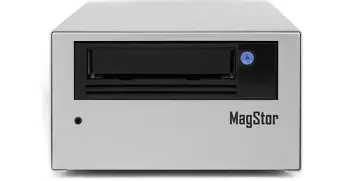
Linear Tape-Open (LTO) remains the standard for high-capacity, cost-effective archival storage in professional environments. An external LTO drive housed in a Thunderbolt 3 enclosure attempts to bridge enterprise-class archival media to modern laptops and workstations that lack native SAS ports. The Magstor Thunderbolt 3 LTO drive represents this class of device: an LTO mechanism with a Thunderbolt 3 interface or a TB3-to-SAS bridge that enables fast connections to contemporary machines without server hardware.
Why professionals consider LTO drives:
- Cost per terabyte for cold storage. When storing many terabytes for long retention windows, cartridges usually cost less per TB than SSDs or high-end HDD arrays.
- Longevity and offline archiving. LTO cartridges are designed for shelf life measured in decades when stored properly, which makes them attractive for legal, media, or institutional archives.
- Air-gap security. Offline tape provides protection against ransomware and accidental deletion because the medium is physically separated from networks.
- Standardized interchange formats. LTFS and tape standards simplify cartridge interchange between locations and vendors.
However, LTO tape is not a drop-in solution for every workflow. It is optimized for large, sequential writes and offline retrieval — not for fast random-access edits. Integration can require backup software that supports tape workflows, media management, and cartridge rotation. Additionally, the initial investment for a reliable external LTO drive plus cartridges and software can be substantial for single users.
Acer Aspire 14 Ai 2025 — modern, mobile, and AI-enabled
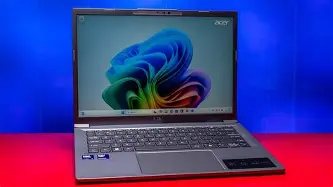
The Acer Aspire 14 Ai 2025 represents the category of contemporary 14-inch ultrabooks that balance portability with capable hardware. “Ai” in the name signals vendor emphasis on hardware or software optimizations for AI-assisted workflows: things like on-device inference, smarter background tasks, or boosted performance under certain workloads. For most buyers the key laptop attributes are CPU performance, fast NVMe storage, memory capacity, display quality, battery life, and the port selection needed to connect external peripherals such as an LTO drive.
Why a modern laptop upgrade matters:
Looking for the best Laptops & Computers deals on Amazon?
Shop Amazon →- Improved day-to-day responsiveness. Faster CPUs and NVMe storage reduce wait times for boot, application launch, and file handling.
- Better editing and preview performance. For photographers and videographers, faster storage and modern integrated GPUs speed scrubbing, transcoding, and timeline responsiveness.
- Battery life and portability. Newer designs extend fieldwork time and reduce the need to carry chargers or heavier machines.
- Connectivity and convenience. If the laptop includes Thunderbolt/USB4, connecting external peripherals like fast SSDs or a TB3 LTO drive is straightforward.
On the flip side, a laptop upgrade does not solve archival requirements. It improves the creation and short-to-mid-term storage and enables more efficient workflows, but long-term, offline archival and cost-per-TB concerns remain.
Pros & Cons
Magstor Thunderbolt 3 LTO Drive — Pros
- Excellent cost-per-TB for long-term archival compared with SSD-based solutions
- Physical cartridges provide an air-gap against ransomware and network failures
- Durable medium with decades-long shelf life under proper conditions
- Standardized formats and cross-vendor interoperability make offsite rotation practical
- Thunderbolt 3 interface offers modern connectivity to laptops without server-grade ports
Magstor Thunderbolt 3 LTO Drive — Cons
- High upfront cost for the drive and professional backup software
- Slower random access — not suitable as primary working storage for editing
- Requires cartridge management and occasional cleaning/media maintenance
- Potential compatibility nuances (drivers, bridge adapters) when connecting to consumer laptops
- Bulkier and less convenient to carry than portable SSDs for daily field work
Acer Aspire 14 Ai 2025 — Pros
- Portable and balanced for daily productivity and content creation
- Modern NVMe storage and memory configurations improve responsiveness
- AI features can accelerate certain repetitive tasks and improve battery/performance management
- Likely includes modern ports (USB-C/Thunderbolt or USB4 on many 2025 models) for peripheral compatibility
- Reasonable price point for a general-purpose machine compared with high-end mobile workstations
Acer Aspire 14 Ai 2025 — Cons
- Internal storage tends to be expensive per TB relative to tape or HDD arrays
- Limited upgradeability in thin-and-light designs — RAM and storage choices at purchase matter
- Not a substitute for a dedicated archival solution if regulatory retention or long-term preservation is required
- On-device AI features are useful but rarely transformative for professional-grade media pipelines without additional software
Comparison Table
| Feature | Magstor Thunderbolt 3 LTO Drive | Acer Aspire 14 Ai 2025 |
|---|---|---|
| Primary purpose | High-capacity archival and offline backup | Portable daily computing and content creation |
| Interface | Thunderbolt 3 (TB3)/SAS bridge for tape mechanism | Modern USB-C/Thunderbolt/USB4 variants common; HDMI, USB-A depending on SKU |
| Ideal user | Media houses, archive managers, IT admins, pros with large long-term archives | Students, professionals, creatives needing mobility and balanced performance |
| Storage type | Removable tape cartridges (offline) | Internal NVMe SSD (primary), with external drive support |
| Access pattern | Sequential streaming; optimized for backups and restores | Low-latency random access; ideal for editing and system tasks |
| Portability | Moderate — external enclosure and cartridges add bulk | High — lightweight and designed for travel |
| Durability & shelf life | High for properly stored cartridges (decades) | SSD longevity limited by write cycles — not intended for long offline archival |
| Setup complexity | Medium to high — needs backup software and media workflow | Low — ready out of the box for general use |
| Cost focus | High initial, low ongoing per-TB for cartridges | Moderate initial, higher per-TB for onboard NVMe storage |
| Best as an upgrade for | Organizations needing robust archival and offsite rotation | Users needing faster editing, better battery life, or improved portability |
Real-world use cases and buyer priorities
Understanding whether either upgrade is “worth it” requires matching the hardware to typical buyer needs.
Photographers and hybrid shooters
Photographers generating hundreds of gigabytes per shoot often face two needs: fast local drives for editing and reliable long-term storage for completed projects. A laptop like the Acer Aspire 14 Ai 2025 improves editing throughput and field mobility. The Magstor LTO drive provides a proven archival strategy for completed shoots — especially when clients or legal requirements demand long-term retention.
Video professionals
4K/8K workflows produce very large files. Editors rely on NVMe storage and fast CPUs for real-time timeline performance. However, completed projects that must be archived for years are commonly moved to tape for cost and longevity reasons. The practical approach for many workflows is to buy both: a laptop or workstation for creation and an LTO drive for archiving.
Small businesses and IT
Small businesses that manage invoices, customer records, and regulatory documents may prioritize reliable, auditable backup solutions. Tape systems offer a defensible archive with an air-gap. For employees who need mobile computing and daily productivity, laptops are essential. Here the decision often isn’t one or the other; both solve different segments of business continuity.
Home users and casual content creators
For general-purpose users, a laptop upgrade will typically deliver more perceivable value. Cloud backup or external HDD/SSD solutions are often sufficient for personal archives. Tape’s advantages come into play at larger scale or when offline, long-term retention is a strict requirement.
Shop the latest Laptops & Computers picks on Amazon.
Browse Now →Buying guide — how to decide
Use this checklist to decide whether to invest in the Magstor Thunderbolt 3 LTO drive, the Acer Aspire 14 Ai 2025, or both.
1. Define the primary problem
- If the immediate bottleneck is slow editing, sluggish apps, or poor battery life — prioritize a laptop upgrade.
- If the problem is reliable, cost-effective long-term retention of terabytes of finished data — prioritize an LTO archival solution.
2. Assess workflow and access patterns
- Frequent read/write and random access: choose fast NVMe storage in a laptop.
- Infrequent restores, large sequential writes (backups/archives): tape is more economical and durable.
3. Total cost of ownership matters
- Factor in cartridge costs, cleaning supplies, and backup software when evaluating an LTO drive.
- For laptops, factor in required SSD capacity and potential need to buy a higher-capacity model up front because upgrades may be limited.
4. Compatibility and connectivity
- Confirm that the chosen laptop supports the external interface needed by the LTO drive (Thunderbolt/USB4 or a supported adapter).
- Check OS support for LTFS and backup applications that integrate with the tape drive.
5. Consider hybrid strategies
- Many buyers combine solutions: use the laptop and fast external SSDs for active projects, then archive final masters to LTO cartridges for long-term retention.
- Implement a 3-2-1 backup strategy: three copies, two different media, one offsite — LTO fits the offsite/air-gap component well.
6. Evaluate future-proofing
- When choosing tape, pick a generation that balances cost and longevity for your retention horizon and ensure you have a migration plan if you retain data beyond media lifetimes.
- When choosing a laptop, prioritize a configuration with enough RAM and storage to delay obsolescence for several years.
Practical tips for integrating the two
If both archival reliability and mobile performance are needed, integrating a laptop and LTO drive in a single workflow can be efficient:
- Work locally on the Acer Aspire 14 Ai 2025 using internal NVMe and fast external SSD scratch disks; finalize and verify projects locally.
- Batch-transfer completed projects to the Magstor Thunderbolt 3 LTO drive during off-hours to avoid interrupting editing work and to match the sequential write profile that tape favors.
- Maintain an organized tape catalog and test restores periodically. The real value of archival media is the ability to retrieve usable data years later, so restoration drills are critical.
- Keep at least one copy offsite as part of a rotation strategy to guard against physical disasters at one location.
Is it worth upgrading?
The simple answer is: it depends. For users whose pain point is daily productivity, sluggish editing, poor battery life, or insufficient portability, upgrading to a laptop like the Acer Aspire 14 Ai 2025 is likely to deliver immediate and visible benefits. For organizations or professionals with large accumulations of finished media and a requirement for long retention, investing in an LTO archival strategy — and therefore an external drive like the Magstor Thunderbolt 3 LTO drive — makes financial and operational sense over the long term.
For many creative pros the pragmatist’s answer is both: upgrade the laptop to improve production speed and invest in an LTO-based archive to economically preserve completed work. The two are complementary rather than mutually exclusive.
Conclusion
Upgrading hardware should be driven by clear goals. The Magstor Thunderbolt 3 LTO drive is a specialized investment that pays dividends when long-term preservation, low cost-per-terabyte, and offline security are priorities. The Acer Aspire 14 Ai 2025 is a sensible laptop upgrade for anyone seeking better responsiveness, mobility, and modern connectivity that accelerates daily tasks. Buyers should match the purchase to their dominant needs: choose the laptop to improve creation and productivity, choose the LTO drive to future-proof archives and backup strategy, or choose both when workflows require fast creation and dependable long-term retention. Ultimately, a thoughtful mix of fast local storage for active work and tape-based archival for long-term retention is often the most resilient and cost-effective approach.