Blind Test: Earbuds vs IEMs - Which is Actually Better?
Introduction
When shopping for portable audio, buyers frequently face a choice between earbuds and in-ear monitors (IEMs). Both formats promise convenience and private listening, but they differ in design philosophy, use cases, and acoustic performance. This article explores those differences through an evidence-based, user-focused lens. It looks beyond marketing claims to answer a practical question: in real-world conditions and blind listening scenarios, which is actually better?
Featured product(s): Earbuds | IEMs
What are Earbuds and IEMs?
Earbuds are small, typically stem-less or shallow-fit devices that rest in the outer ear concha without deeply sealing the ear canal. Classic earbuds often refer to the thin, open-fit designs that prioritize comfort and ambient awareness. Recently, the term also covers true wireless variants (TWS) that combine the earbud form factor with integrated battery, microphones, and Bluetooth circuitry.
In-ear monitors (IEMs) are designed to be inserted into the ear canal using silicone or foam tips, creating a seal that improves isolation and bass response. Originally developed for stage monitoring and professional musicians, modern IEMs come in consumer and pro-audio variants, wired or wireless, single-driver or multi-driver, and with removable cables in higher-end models.
Blind Test Methodology and Criteria
In a blind test context—where listeners do not know which device they are hearing—perception is guided by raw sonic cues and comfort under realistic conditions. The following practical criteria are used to judge earbuds and IEMs:
- Sound quality: clarity, detail, instrument separation, bass accuracy, midrange fidelity, treble extension.
- Isolation and leak: how much external noise is reduced and whether sound leaks out.
- Comfort and fit: long-term wearability for different ear shapes and activities.
- Durability and maintenance: resistance to wear, ease of cleaning, and repairability.
- Features: active noise cancellation (ANC), wireless codecs, call quality, latency for gaming/streaming.
- Real-world use: commute, office, gym, studio/monitoring, travel, casual listening.
Detailed Analysis
Sound Quality: Which Structure Wins?
In blind listening, IEMs typically have an advantage for accuracy and detail because the in-ear seal reduces environmental interference and enables better low-frequency coupling. Multi-driver IEMs can separate frequencies more distinctly, producing a clearer midrange and more controlled bass. However, high-quality earbuds with well-tuned drivers can sound spacious and lifelike, often presenting a less “in-head” sensation than tightly sealed IEMs.
For listeners who prioritize a neutral or analytical sound (mixing, reference listening), IEMs often perform better. For listeners seeking a more open, airy presentation—often preferred for casual music, podcasts, or ambient listening—earbuds can be more pleasant in blind tests due to their natural stage perception.
Isolation and Noise Control
IEMs win decisively at passive isolation because of the ear canal seal. This improves perceived bass and helps active noise cancellation work more effectively when present. Isolation is a real-world advantage on planes, trains, and noisy streets.
Earbuds, particularly open or semi-open designs, allow ambient sound in. This can be safer for outdoor use (running, cycling) and useful in office environments where situational awareness is desirable. However, in noisy environments, earbuds may force users to raise volume levels, which has long-term hearing implications.
Comfort and Long-Term Wear
Comfort is subjective and highly dependent on ear anatomy. Earbuds offer a “no-insertion” feel that many users find less intrusive during long sessions. They can be more comfortable for people who dislike the sensation of inserting something into the ear canal.
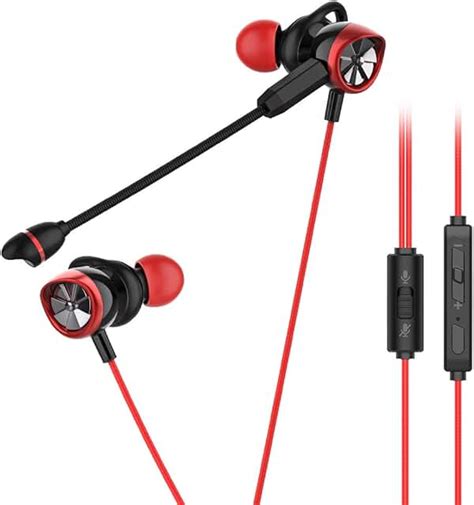
IEMs can be extremely comfortable when properly fitted with the right tip material and size. Foam tips often provide better comfort and seal at the cost of some convenience. For prolonged wear, some users report ear canal fatigue with IEMs; others prefer the secure and isolating fit that reduces the need for higher volumes.
Call Quality and Microphones
True wireless earbuds often prioritize robust microphone arrays and wind-reduction processing, leading to superior call performance in many mid-range and flagship models. IEMs with integrated mics can perform well too, but wired IEMs without remote modules are less convenient for hands-free calls.
Looking for the best Electronics deals on Amazon?
View Offers →Latency and Gaming
For latency-sensitive applications like gaming and competitive streaming, low-latency codecs and direct wired connections matter. Wired IEMs provide near-zero latency and are favored by professional streamers and musicians. Wireless earbuds improving with gaming modes and low-latency codecs (aptX LL, proprietary implementations) narrow the gap, yet wired IEMs still have an edge for critical real-time monitoring.
Durability, Maintenance, and Value
IEMs with detachable cables offer reparability and longer service life. Replaceable tips and cables make them a better long-term investment for some buyers. Earbuds—especially true wireless models—are subject to battery degradation and, in many cases, limited repairability. For buyers prioritizing longevity, high-quality wired IEMs are often more cost-effective over time.
Pros & Cons
Earbuds
- Pros:
- Comfortable for users who dislike in-ear insertion
- Better ambient awareness and safety outdoors
- Many modern earbuds include strong call performance and smart features
- Often simpler to put in and take out quickly
- Cons:
- Generally poorer passive isolation and bass coupling
- Can require higher volume in noisy environments
- True wireless earbuds have limited lifespan due to battery wear
- Less suited for critical listening or stage monitoring
IEMs
- Pros:
- Superior isolation and bass performance with proper fit
- Often more accurate, detailed sound—good for audiophiles and professionals
- Wired and detachable-cable options enhance longevity and repairability
- Better for monitoring, travel, and noisy environments
- Cons:
- Fit can be uncomfortable for some users, especially over long sessions
- Less ambient awareness—safety concerns for outdoor activities
- Higher-end IEMs can be expensive; finding the right tip/fit requires patience
- Wireless IEMs may still sacrifice some sound fidelity for convenience
Comparison Table
| Feature | Earbuds | IEMs |
|---|---|---|
| Fit | Rest in outer ear; non-sealing; easier to insert/remove | Insert into ear canal; seal with tips; requires correct tip sizing |
| Isolation | Low to moderate (ambient sound remains) | High (passive seal) — excellent with foam tips |
| Sound signature | Generally more open and airy; bass may be less impactful | More controlled bass and accurate mids; can be tuned for reference listening |
| Portability | Very portable; TWS cases add convenience | Highly portable; wired models require cable management |
| Battery (wireless) | Integrated batteries — finite lifespan | Wireless IEMs have batteries too; wired IEMs have none |
| Call performance | Often superior in modern TWS due to multiple mics and processing | Good if designed for calls; wired variants depend on inline remotes |
| Price range | Wide — budget to premium | Wide — entry-level to high-end multi-driver models |
| Best for | Commuting, casual listening, office use where awareness is needed | Travel, studio monitoring, audiophile listening, noisy environments |
Real-World Use Cases and Buyer Priorities
Different buyers prioritize different attributes. Below are common real-world scenarios and which format tends to be more appropriate.
Commuters and Travelers
For noisy commutes and flights, IEMs with good seal and optional ANC provide the clearest advantage because they reduce ambient noise without forcing excessive volume. Travel-focused earbuds that combine ANC and transparency modes offer a convenient compromise for those who want situational awareness at times.

Office and Open Workspaces
Earbuds are attractive in office settings where brief conversations and situational awareness are common. If the priority is concentration and blocking coworker chatter, IEMs with ANC are preferable.
Gym and Outdoor Activity
Safety matters. Open-fit earbuds maintain better awareness of surroundings, reducing risk during outdoor workouts. Sweat resistance (IP rating) and secure fit should factor into the buying decision. For indoor gym use, IEMs that lock in place are excellent for isolation and bass-heavy workout playlists.
Music Creation and Critical Listening
IEMs designed for monitoring—often with multiple drivers or flat tuning—are the default choice for musicians and engineers who need accurate representation. Earbuds are seldom used for mixing but can serve as consumer reference points for how tracks will sound to mainstream listeners.
Casual Media Consumption and Calls
Modern true wireless earbuds with good call processing excel for remote work calls, podcasts, and casual media. They balance convenience and performance for everyday use.
Buying Guide: How to Choose Between Earbuds and IEMs
To make an informed purchase, buyers should consider the following checklist, ranked by impact on daily use:
1. Primary Use Case
Decide whether the device will be used mainly for commuting, office work, exercise, studio work, or mixed use. Choose IEMs for isolation and accuracy; choose earbuds for awareness and convenience.
2. Comfort and Fit
Try multiple tip sizes and materials for IEMs. Foam tips often provide the best seal and comfort for long sessions. For earbuds, test how they sit in the ear for prolonged wear—some ears prefer the shallow fit.
Shop the latest Electronics picks on Amazon.
Shop Amazon →3. Sound Priorities
Look at sound signature descriptions: “neutral,” “V-shaped,” “warm,” and “bright.” If unsure, read blind-listening reviews and frequency-response graphs for objective perspective.
4. Connectivity and Codecs
For wireless listening, verify supported Bluetooth codecs (SBC, AAC, aptX, LDAC). Buyers who stream high-resolution audio or require low latency for gaming should prioritize aptX/LDAC or wired options.
5. Isolation and ANC
Consider whether ANC is necessary. IEMs with passive isolation plus ANC perform best on planes and in noisy environments. Earbuds with effective ANC can still be a good compromise for general use.
6. Battery and Longevity
For TWS earbuds, check advertised battery life and case capacity; expect battery capacity to decline over several years. If longevity matters more than convenience, favor wired IEMs or models with replaceable cables.
7. Microphone and Call Quality
Verify microphone arrays and wind-reduction features for users who take many calls outdoors. Reviews with real-world call tests are particularly valuable.
8. Physical Durability
IP ratings, build materials, and warranty coverage matter—especially for gym-goers or those who travel frequently. Consider serviceability: detachable cables and replaceable tips prolong usable life.
9. Price and Value
Set a budget and compare like-for-like: a high-end earbud may compete with a mid-tier IEM of similar price but different strengths. Factor in long-term costs such as battery replacement or cable replacement.
10. Try Before Buying
Whenever possible, audition devices in a quiet environment and while performing real tasks (walking, sitting on transit, or working out). Blind listening tests—where possible—reveal which device best matches the listener’s preferences without brand bias.
Practical Tips for Getting the Most Out of Either Choice
- Ear tip selection: Try both silicone and foam tips for IEMs—foam often improves isolation and comfort.
- EQ and tuning: Gentle equalization can compensate for fit-related bass deficiencies, but avoid excessive gain at low frequencies to protect hearing.
- Cleaning: Keep earbud grills and IEM tips clean to maintain clarity and hygiene.
- Case and storage: Proper storage reduces cable strain for wired IEMs and protects charging cases for TWS earbuds.
- Firmware updates: Apply updates for wireless devices to improve call processing, ANC performance, and codec support.
Conclusion
In a blind test, neither earbuds nor IEMs are universally “better”; the winner depends on use case and listener priorities. IEMs generally offer superior isolation, bass control, and fidelity—advantages that matter for travel, critical listening, and noisy environments. Earbuds provide comfort, ambient awareness, and convenience—advantages that suit commuting in safer contexts, office use, and casual listening where an open soundstage is preferred.
Buyers should prioritize intended use, comfort, and the features that directly affect daily experience: isolation, battery life, call quality, and durability. Whenever possible, audition products and test different tips and settings. For listeners seeking the most accurate sound and best isolation, IEMs are the practical choice. For those who value comfort, situational awareness, and seamless wireless convenience, earbuds are often the better fit. Ultimately, the best device is the one that aligns with how it will be used in the real world.